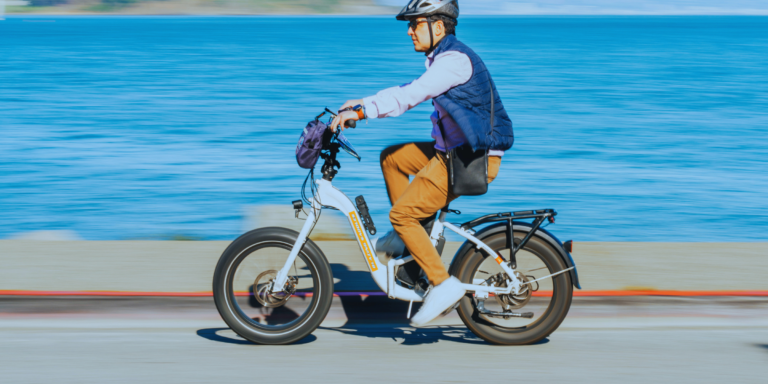
A person wearing a helmet, sunglasses, blue vest, and brown pants rides an electric bicycle along a waterfront road with blue water in the background.

E-Bike Accidents Are Rising in the South Bay. Here’s What Riders and Families Need to Know.

Walk through Hermosa Beach, Manhattan Beach, or Redondo Beach on any weekend and you’ll see them everywhere: electric bicycles carrying students to school, commuters heading to work, and groups of riders cruising along local streets and beach communities.

E-bikes have become a popular and practical form of transportation throughout the South Bay. They offer convenience, reduce traffic congestion, and make cycling accessible to more people. But as their popularity has grown, so have concerns about safety, liability, and serious injuries.

A recent Los Angeles Times investigation highlighted a troubling trend across California: e-bike crashes are increasing, emergency rooms are treating more riders than ever before, and law enforcement agencies are stepping up enforcement efforts ahead of the summer season.

For South Bay residents, the issue is particularly relevant. Communities such as Hermosa Beach and Manhattan Beach have become focal points in conversations about e-bike safety as local officials, schools, parents, and law enforcement work to address the growing number of incidents involving riders of all ages.

The Numbers Are Moving in the Wrong Direction

According to medical professionals interviewed by the Los Angeles Times, Children’s Hospital Los Angeles has seen e-bike-related admissions more than double year over year in recent years. Physicians report that e-bike injuries are often more severe than those involving traditional bicycles because of the increased speed and weight of electric bikes.

Researchers are seeing similar patterns elsewhere. Studies have documented substantial increases in e-bike-related injuries, with trauma centers reporting more serious fractures, head injuries, and multi-system trauma than typically seen with conventional bicycle accidents.

While precise statistics remain difficult to track because many agencies still categorize e-bike incidents as bicycle crashes, the overall trend is clear: e-bike injuries are becoming a significant public safety concern.

Understanding the Difference Between an E-Bike and an Electric Motorcycle

One of the biggest sources of confusion for parents and riders involves the distinction between legal e-bikes and electric motorcycles.

Under California law, Class 1, Class 2, and Class 3 e-bikes are subject to specific speed and equipment requirements. Once a vehicle exceeds those limits, lacks pedals, or is capable of substantially higher speeds, it may no longer qualify as an e-bike under state law.

That distinction matters.

Vehicles that fall into the category of electric motorcycles or mopeds may require registration, licensing, and additional legal requirements. Riders and parents are often surprised to learn that some products marketed online as “e-bikes” may not legally qualify as e-bikes at all.

California regulators have recently increased scrutiny of manufacturers and retailers that misrepresent high-powered electric motorcycles as e-bikes, reflecting growing concerns about consumer confusion and rider safety.

Why Liability Matters After an E-Bike Crash

Many people think of e-bike accidents as bicycle accidents. Legally, however, the consequences can be far more complicated.

When an e-bike collision causes serious injury, several parties may potentially share responsibility depending on the circumstances. Liability may involve:

  • The rider operating the e-bike
  • A motor vehicle driver
  • A property owner
  • A manufacturer or retailer
  • Parents or guardians in certain situations involving minors
  • Other individuals who contributed to unsafe conditions

Questions of liability become especially important when a crash results in catastrophic injuries such as traumatic brain injuries, spinal cord injuries, orthopedic injuries, or permanent disability.

Determining responsibility often requires a detailed investigation into how the collision occurred, the type of vehicle involved, whether modifications were made to increase speed, and whether applicable laws were followed.

When E-Bike Accidents Lead to Wrongful Death Claims

The most tragic e-bike incidents can result in fatalities.

The Los Angeles Times recently reported on several fatal collisions involving e-bike riders and pedestrians throughout California, including cases involving minors operating high-powered electric vehicles.

When a fatal accident occurs, surviving family members may face not only emotional devastation but also significant financial burdens. Wrongful death claims may arise when negligence, reckless conduct, unsafe products, or other preventable factors contribute to a fatal collision.

As e-bike usage continues to expand, courts, insurers, and attorneys are increasingly being asked to address legal questions that did not exist at this scale just a few years ago.

A Growing Issue for South Bay Communities

The conversation surrounding e-bikes is unlikely to disappear anytime soon.

Local schools are developing policies, law enforcement agencies are increasing education and enforcement efforts, and lawmakers continue to evaluate how existing regulations apply to rapidly evolving technology.

At the same time, thousands of responsible riders continue to use e-bikes safely every day throughout the South Bay.

The challenge moving forward will be balancing the benefits of e-bike transportation with the need to reduce preventable injuries and ensure that riders, pedestrians, and motorists can safely share the road.

As e-bike use continues to grow, understanding the legal and safety issues surrounding these vehicles will become increasingly important for South Bay families, riders, and anyone affected by a serious collision.


DISCLAIMER: This article is provided for informational purposes only and does not constitute legal advice. The information contained herein should not be relied upon as a substitute for legal counsel. This article provides general information about the law, which may differ by jurisdiction and is subject to change. No attorney-client relationship is formed by reading this article or by contacting our firm through this website. Readers should consult with qualified legal counsel before taking any action based on this information.