Memorial Day Tribute to Major Albro Lynn Lundy Jr.
A fellow pilot shares a Memorial Day Tribute to Major Albro L. Lundy Jr., one of many fallen heroes who gave the ultimate sacrifice for…

By Christine Daniels
Many of my friends don’t really know what estate planning means. Granted, most of them are my age, in their mid-twenties and have been lucky enough to not have experienced a parent’s unexpected, premature passing. Nonetheless, having an idea of the three main ways to administer the assets after a loved one’s passing is good info to have in your back pocket. In addition to giving you an idea of the logistics behind a very emotionally draining time, it can also allow you be in a better place when thinking of your own assets.
When you die without having done anything to prepare for this event (i.e. no will, no trust) most* of your assets will need to be probated. What does that mean? A judge at the Probate Courts — located in Downtown LA for the entire LA county — will need to oversee the administrator (the person in charge of managing all your assets: usually your closest living relative) while your assets are transferred out of your name and into the names of your heirs.
But who are your heirs when you die without a will and without a trust?
Your assets will go as dictated in the California Probate Code. This is called “intestacy.” In this section of the California Probate Code, state legislators tried to guess how the average person would like to distribute their assets when they die. That is, if you have a spouse and a child, you would most likely want to divide your things between them 50-50. Or for example if you had no spouse or child, that you would want your things to go to your parents, assuming they outlived you. That’s all fine and dandy if you have an “average” family life or “average” preferences, but when you vary from the mold, the intestacy outcomes can be unwanted.
Say for example, that you are very close to your siblings but are estranged from one or both of your parents when you pass away without a spouse and without children of your own. The intestacy law would dictate that all your assets go to your parents, not your siblings, no matter the evidence of your relationships.
And that’s not even taking into account the cost. Transferring your assets through Probate Court will put a significant dent in your “estate” (your assets). The fees are imposed by law, and both the administrator as well as their attorney will each get a fee. The statutory fee is as follows:
(1) 4% on the first $100,000.
(2) 3% on the next $100,000.
(3) 2% on the next $800,000.
(4) 1% on the next $9,000,000.
(5) 0.5% on the next $15,000,000.
(6) For all amounts above $25,000,000, a reasonable amount to be determined by the court.
(7) Lastly, the court may allow additional compensation for extraordinary services by the attorney for the personal representative in an amount the court determines is just and reasonable. Things like the sale of property would generate additional fees.
So for an example’s sake, let’s say you passed away with just a house worth $400,000 (don’t forget that your home’s fair market value at date of death will be included, not the purchase price, so for LA home owner, this $400,000 is really low). Your administrator will be paid $11,000 and the attorney for your administrator will also be paid $11,000—compensating both for their time and effort through this probate. Also, you don’t get to reduce the fees by any mortgage owed.
Did I mention the time? To open and close a probate—where there are no bumps in the road—takes a minimum of a year from the filing date (not date of death).
What about out of pocket costs for this hypothetical $400,000 probate? These costs exist in addition to the $22,000 in fees:
So now that you’ve made it to this section, and you think: “Good, writing a Will is a way better plan than doing nothing.” While there is some truth to that statement, it’s not as much as you’d expect.
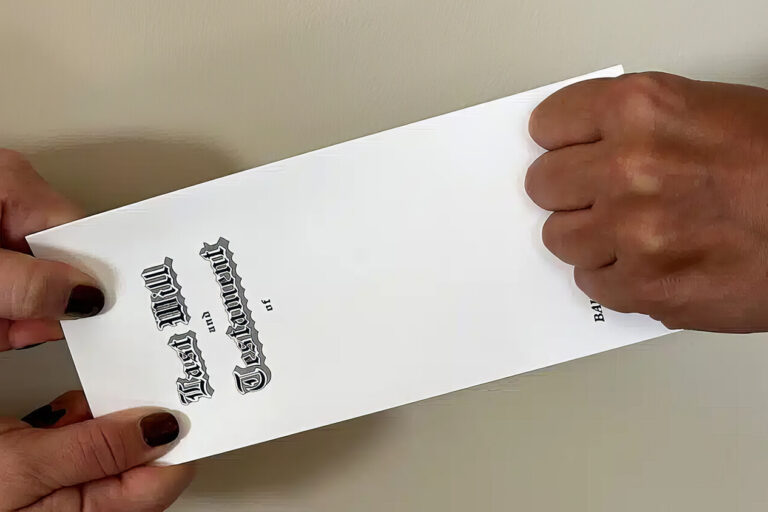
In your Will, you – rather than the state legislature – would be able to decide who gets your assets (great Pro!). However, a Will doesn’t get you out of Probate, at all. The Will’s function is just to provide the Judge instructions on what to give to whom. The fees and duration of the Probate remain the same. You can however, name who you want to administer the estate and have them serve without bond, which will save some money.
Here comes the magnificent legal document called the Trust: this is your ticket out of probate.
With a Trust, you set it up during life and you decide who gets what – you even get a say as to when (i.e. not till reaching age of 30) or how (i.e. give outright or give in different types of trusts offering a variety of protections). Upon your passing, your family and friends will not have to go through the hassle of opening a probate to transfer title. Your successor trustee (who you identified in the trust) will go to an attorney, who specializes in this field, and will embark on a journey called “Trust Administration.” This generally consists of:
(1) Giving notice to your beneficiaries that you have passed away and that the Successor Trustee is going to be in charge while your assets are transitioned to the beneficiaries.
(2) Updating title to your real estate, bank accounts, cars, etc.
(3) Preparing necessary tax forms and paying off creditors.
(4) Distributing the assets, and if specified in the trust, opening up sub trusts.
For situations where there are no bumps in the road, this process takes between 4 to 6 months, and distribution can be made prior to the closing of the trust in most instances. Unlike in probate, the cost is not set by law: the attorney gets paid for his hourly rate (and quite a bit of this work can be done by paralegals working under the attorney’s supervision) and the successor Trustee is usually entitled to 1% of the assets for one year of work. This is significantly less than the probate fees.
Another bonus of going the Trust route, is that the Trust can protect you when you are incapacitated (whereas a will only kicks in after death). This means that if you are physically or mentally incapacitated, your successor trustee can step up and manage your assets and care for you.
When you do go this route there are a couple of negatives that you should be aware of:
Hopefully this can be a good starting point to understand what basic options exist when we need to transfer assets. Here at Baker, Burton and Lundy, we believe in our clients making educated decisions about their estate plans. We won’t rattle off a bunch of legal concepts you can’t wrap your head around. Our job is to help you know what the options are and what the pros and cons of each path you might take. You are in the best position to know what would work best for you, it’s our job to facilitate that process with 40 years of experience in the field to know what works and what doesn’t.
*Assets such as your IRA, life insurance, bank accounts – so long as they specify beneficiaries that survived you—will automatically transfer without need of court supervision. Assets that don’t have a title (such as your epic CD collection) also don’t require going into probate because there is no change in title to supervise.
Please Note: This document DOES NOT constitute legal advice. Please consult an attorney for legal advice on what to do in a particular situation.

A fellow pilot shares a Memorial Day Tribute to Major Albro L. Lundy Jr., one of many fallen heroes who gave the ultimate sacrifice for…